Buy algorobots.eu ?
We are moving the project
algorobots.eu .
Are you interested in purchasing the domain
algorobots.eu ?
domain@kv-gmbh.de · 0541-91531010
Buy algorobots.eu ?
What is the difference between intellectual disability and learning disability?
Intellectual disability refers to limitations in intellectual functioning and adaptive behavior, which can affect a person's ability to learn and function independently. It is typically diagnosed before the age of 18 and can result in significant limitations in cognitive and adaptive skills. On the other hand, learning disabilities refer to specific difficulties in acquiring and using skills in reading, writing, math, or other academic areas. These difficulties are not primarily due to intellectual disabilities, sensory impairments, or other factors, and individuals with learning disabilities often have average or above-average intelligence. In summary, the main difference between intellectual disability and learning disability is that intellectual disability involves limitations in overall intellectual functioning and adaptive behavior, while learning disabilities are specific difficulties in certain academic areas. **
What is intellectual disability?
Intellectual disability is a condition characterized by limitations in intellectual functioning and adaptive behavior. Individuals with intellectual disability may have difficulties with reasoning, problem-solving, and learning new skills. This condition typically manifests before the age of 18 and can vary in severity, with some individuals requiring more support than others to navigate daily life. Support services and interventions are often provided to help individuals with intellectual disability reach their full potential and lead fulfilling lives. **


Similar search terms for Intellectual
Top-Angebote
Products related to Intellectual:
-
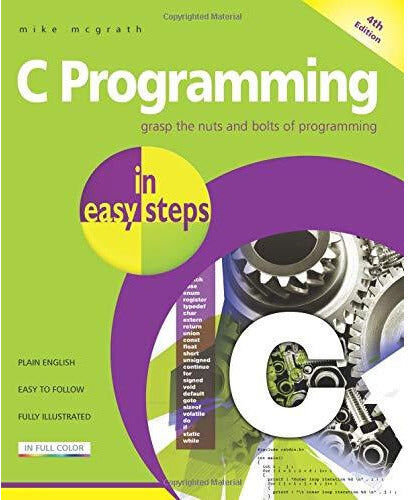
In Easy Steps Limited C Programming In Easy Steps 4th EditionC Programming in easy steps has an easy-to-follow style that will appeal to anyone who wants to begin programming in C, from programmers moving from another programming language, to the student who is studying C programming at school or college, or to those seeking a career in computing who need a fundamental understanding of procedural programming. C Programming in easy steps begins by explaining how to download and install a free C compiler so that you can quickly begin to create your own executable programs by copying the book's examples. You need have no previous knowledge of any programming language so it's ideal for the newcomer to computer programming. Each chapter builds your knowledge of C. C Programming in easy steps contains separate chapters on the major features of the C language. There are complete example programs that demonstrate each aspect of C together with screenshots that illustrate the output when that program has been executed. The sample code provided all has colored syntax-highlighting for clearer understanding. By the end of this book you will have gained a sound understanding of the C language and be able to write your own C programs and compile them into executable files that can be run on any compatible computer. Fully updated and revised since the third edition, which was published in April 2009.5,49 £*Shipping: 2,99 £Secure redirect to the provider
-
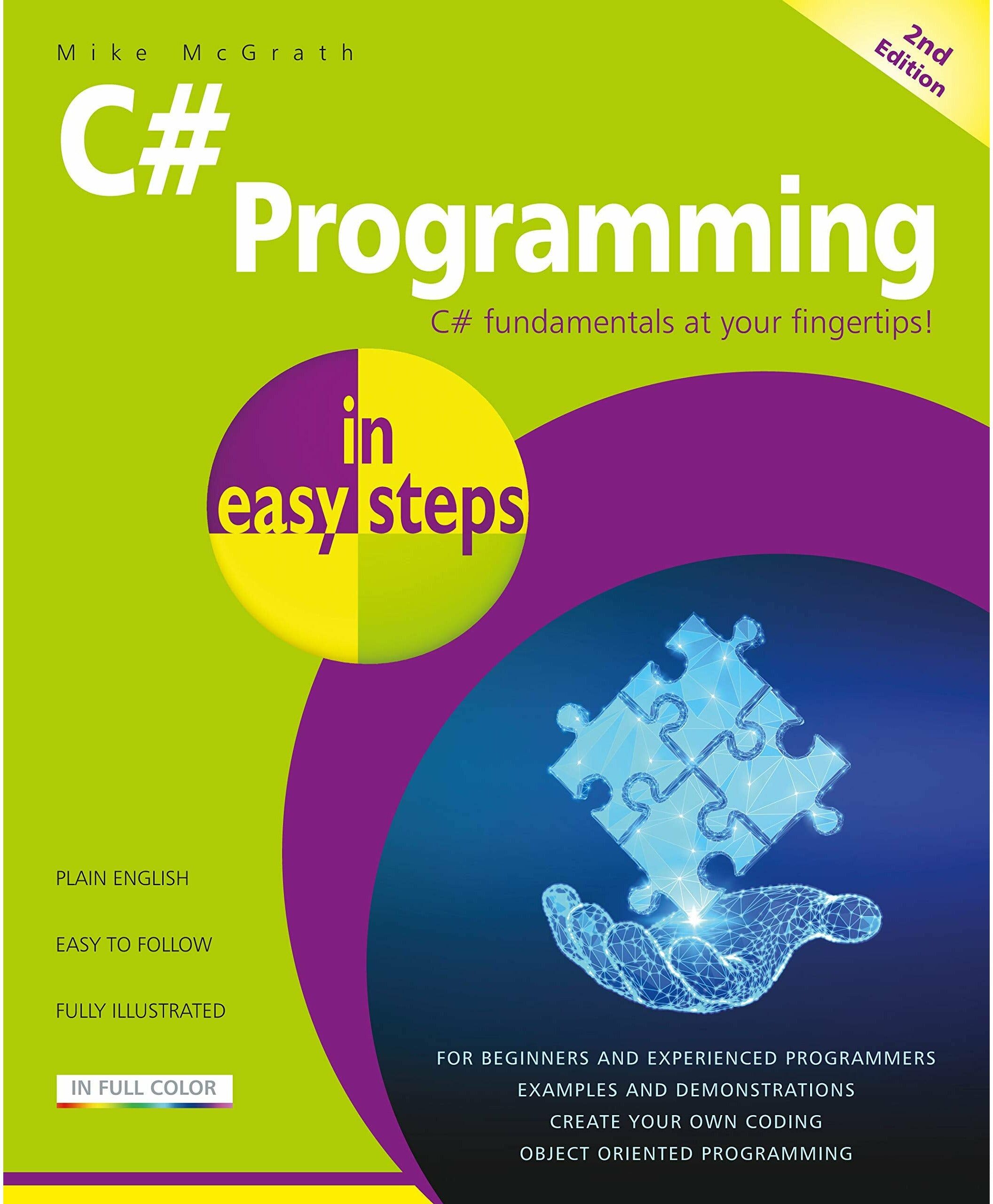
In Easy Steps Limited C# Programming in easy steps, 2nd edition by Mike McGrathC# Programming in easy steps, 2nd edition will teach you to code applications, and demonstrates every aspect of the C# language you will need to produce professional programming results. Its examples provide clear syntax-highlighted code showing C# language basics including variables, arrays, logic, looping, methods, and classes. C# Programming in easy steps, 2nd edition begins by explaining how to install the free Visual Studio Community Edition, to create an environment in which you can quickly begin to create your own executable programs by copying the book's examples. It demonstrates all the C# language basics before moving on to provide examples of Object Oriented Programming. The book concludes by demonstrating how you can use your acquired knowledge to create graphic programs for traditional PC Desktop apps, and also as Universal apps for multiple devices. C# Programming in easy steps, 2nd edition has an easy-to-follow style that will appeal to: Anyone who wants to begin programming in C# The programmer who quickly wants to add C# to their skills set The hobbyist who wants to begin creating apps for their own computer The student, and to those seeking a career in computing, who need a fundamental understanding of C# programming Table of contents: Getting started Storing values Performing operations Making statements Devising methods Handling strings Accessing files Solving problems Creating objects Controlling events Building an application Targeting devices4,98 £*Shipping: 1,99 £Secure redirect to the provider
-
Uplift Essentials Smart Automatic Curtain Robot Opener For Remote Controlled Home Automation track TypeTransform your mornings and evenings with the effortless comfort of a smarter home. This automatic curtain opener turns your existing curtains into a modern handsfree system in seconds, making it perfect for busy homeowners, renters, and smart home...127,97 $*Shipping: 0,00 $Secure redirect to the provider
-
soundcore AeroFit 2 AI Assistant AI Translation for a Connected WorldBulk Headphones, Earbuds, and Speakers for Business >>>>> Stay Comfortable, Stay Aware: With soft materials and a non-invasive design, the earbuds deliver all-day comfort and breathability, keeping you attuned to the world while enjoying music. Free...109,99 $*Shipping: 0,00 $Secure redirect to the provider


-
What are intellectual hobbies?
Intellectual hobbies are activities that stimulate the mind and engage one's cognitive abilities. These hobbies often involve learning, problem-solving, and critical thinking. Examples of intellectual hobbies include reading, writing, puzzles, chess, and learning a new language. Engaging in intellectual hobbies can provide mental stimulation, enhance cognitive skills, and offer a sense of fulfillment and enjoyment. **
-
Can people with intellectual disabilities or learning difficulties graduate from secondary school?
Yes, people with intellectual disabilities or learning difficulties can graduate from secondary school. With the appropriate support and accommodations, individuals with these challenges can successfully complete their secondary education. Schools can provide specialized programs, individualized education plans, and additional resources to help these students achieve their academic goals and earn their high school diploma. It is important to promote inclusive education and provide equal opportunities for all students to succeed. **
-
What is intellectual further education?
Intellectual further education refers to the process of continuing to expand one's knowledge and skills beyond formal education. It involves engaging in activities such as attending workshops, seminars, or online courses to deepen understanding in a particular subject area or to acquire new skills. Intellectual further education is a lifelong pursuit that allows individuals to stay current with advancements in their field and to remain intellectually stimulated. It can also lead to personal growth and career advancement. **
-
What is an intellectual hobby?
An intellectual hobby is a leisure activity that involves engaging in activities that stimulate the mind and require critical thinking, creativity, and problem-solving skills. These hobbies often involve learning new concepts, exploring complex ideas, or engaging in activities that challenge the intellect. Examples of intellectual hobbies include reading, writing, solving puzzles, playing strategic games, and engaging in philosophical discussions. These hobbies not only provide enjoyment and relaxation but also help to improve cognitive abilities and expand knowledge. **


What does intellectual superiority mean?
Intellectual superiority refers to the possession of advanced cognitive abilities, critical thinking skills, and knowledge in comparison to others. It is not just about having a high IQ, but also about being able to apply one's intelligence in a practical and effective manner. Intellectual superiority can manifest in various forms, such as problem-solving, creativity, and the ability to grasp complex concepts quickly. It is important to note that intellectual superiority does not necessarily equate to being better than others as a person, but rather reflects a higher level of intellectual capacity and capability. **
Can animals develop intellectual disabilities?
Yes, animals can develop intellectual disabilities. Just like humans, animals can experience developmental disorders or brain injuries that affect their cognitive abilities. These disabilities can impact an animal's ability to learn, problem-solve, and interact with their environment. It is important for animal caregivers and veterinarians to be aware of these conditions and provide appropriate support and care for animals with intellectual disabilities. **
Top-Angebote
Products related to Intellectual:
-
Discount Dollar Deals Childrens Intellectual Development Toy Clever Calculation, Logical Thinking, And Password Cracking Game For Kids Childrens Intellectual Development Toy Clever Calculation, Logical Thinking, And Password Cracking Game For KidsUnlock your child's full potential with this children's intellectual development toy. Designed to engage young minds, this game encourages clever calculation and sharpens logical thinking skills through fun, handson puzzles. Perfect for kids who...34,97 $*Shipping: 0,00 $Secure redirect to the provider
-
York Wallcoverings Beige Robotics Peel and Stick WallpaperA simple drawing of robotic parts become line art in pattern Robotics. This Robotics Peel & Stick Wallpaper measures approximately 27 inches wide by 20 feet long, covering About 45 square feet per roll.59,50 $*Shipping: 0,00 $Secure redirect to the provider
-
In Easy Steps Limited C Programming In Easy Steps 4th EditionC Programming in easy steps has an easy-to-follow style that will appeal to anyone who wants to begin programming in C, from programmers moving from another programming language, to the student who is studying C programming at school or college, or to those seeking a career in computing who need a fundamental understanding of procedural programming. C Programming in easy steps begins by explaining how to download and install a free C compiler so that you can quickly begin to create your own executable programs by copying the book's examples. You need have no previous knowledge of any programming language so it's ideal for the newcomer to computer programming. Each chapter builds your knowledge of C. C Programming in easy steps contains separate chapters on the major features of the C language. There are complete example programs that demonstrate each aspect of C together with screenshots that illustrate the output when that program has been executed. The sample code provided all has colored syntax-highlighting for clearer understanding. By the end of this book you will have gained a sound understanding of the C language and be able to write your own C programs and compile them into executable files that can be run on any compatible computer. Fully updated and revised since the third edition, which was published in April 2009.5,49 £*Shipping: 2,99 £Secure redirect to the provider
-
In Easy Steps Limited C# Programming in easy steps, 2nd edition by Mike McGrathC# Programming in easy steps, 2nd edition will teach you to code applications, and demonstrates every aspect of the C# language you will need to produce professional programming results. Its examples provide clear syntax-highlighted code showing C# language basics including variables, arrays, logic, looping, methods, and classes. C# Programming in easy steps, 2nd edition begins by explaining how to install the free Visual Studio Community Edition, to create an environment in which you can quickly begin to create your own executable programs by copying the book's examples. It demonstrates all the C# language basics before moving on to provide examples of Object Oriented Programming. The book concludes by demonstrating how you can use your acquired knowledge to create graphic programs for traditional PC Desktop apps, and also as Universal apps for multiple devices. C# Programming in easy steps, 2nd edition has an easy-to-follow style that will appeal to: Anyone who wants to begin programming in C# The programmer who quickly wants to add C# to their skills set The hobbyist who wants to begin creating apps for their own computer The student, and to those seeking a career in computing, who need a fundamental understanding of C# programming Table of contents: Getting started Storing values Performing operations Making statements Devising methods Handling strings Accessing files Solving problems Creating objects Controlling events Building an application Targeting devices4,98 £*Shipping: 1,99 £Secure redirect to the provider
-
What is the difference between intellectual disability and learning disability?
Intellectual disability refers to limitations in intellectual functioning and adaptive behavior, which can affect a person's ability to learn and function independently. It is typically diagnosed before the age of 18 and can result in significant limitations in cognitive and adaptive skills. On the other hand, learning disabilities refer to specific difficulties in acquiring and using skills in reading, writing, math, or other academic areas. These difficulties are not primarily due to intellectual disabilities, sensory impairments, or other factors, and individuals with learning disabilities often have average or above-average intelligence. In summary, the main difference between intellectual disability and learning disability is that intellectual disability involves limitations in overall intellectual functioning and adaptive behavior, while learning disabilities are specific difficulties in certain academic areas. **
-
What is intellectual disability?
Intellectual disability is a condition characterized by limitations in intellectual functioning and adaptive behavior. Individuals with intellectual disability may have difficulties with reasoning, problem-solving, and learning new skills. This condition typically manifests before the age of 18 and can vary in severity, with some individuals requiring more support than others to navigate daily life. Support services and interventions are often provided to help individuals with intellectual disability reach their full potential and lead fulfilling lives. **
-
What are intellectual hobbies?
Intellectual hobbies are activities that stimulate the mind and engage one's cognitive abilities. These hobbies often involve learning, problem-solving, and critical thinking. Examples of intellectual hobbies include reading, writing, puzzles, chess, and learning a new language. Engaging in intellectual hobbies can provide mental stimulation, enhance cognitive skills, and offer a sense of fulfillment and enjoyment. **
-
Can people with intellectual disabilities or learning difficulties graduate from secondary school?
Yes, people with intellectual disabilities or learning difficulties can graduate from secondary school. With the appropriate support and accommodations, individuals with these challenges can successfully complete their secondary education. Schools can provide specialized programs, individualized education plans, and additional resources to help these students achieve their academic goals and earn their high school diploma. It is important to promote inclusive education and provide equal opportunities for all students to succeed. **
Similar search terms for Intellectual
-
Uplift Essentials Smart Automatic Curtain Robot Opener For Remote Controlled Home Automation track TypeTransform your mornings and evenings with the effortless comfort of a smarter home. This automatic curtain opener turns your existing curtains into a modern handsfree system in seconds, making it perfect for busy homeowners, renters, and smart home...127,97 $*Shipping: 0,00 $Secure redirect to the provider
-
soundcore AeroFit 2 AI Assistant AI Translation for a Connected WorldBulk Headphones, Earbuds, and Speakers for Business >>>>> Stay Comfortable, Stay Aware: With soft materials and a non-invasive design, the earbuds deliver all-day comfort and breathability, keeping you attuned to the world while enjoying music. Free...109,99 $*Shipping: 0,00 $Secure redirect to the provider
-
York Wallcoverings Grey Robotics Peel and Stick WallpaperA simple drawing of robotic parts become line art in pattern Robotics. This Robotics Peel & Stick Wallpaper measures approximately 27 inches wide by 20 feet long, covering About 45 square feet per roll.53,99 $*Shipping: 0,00 $Secure redirect to the provider
-
Uplift Essentials Smart Automatic Curtain Robot Opener For Remote Controlled Home Automation rod TypeTransform your mornings and evenings with the effortless comfort of a smarter home. This automatic curtain opener turns your existing curtains into a modern handsfree system in seconds, making it perfect for busy homeowners, renters, and smart home...134,97 $*Shipping: 0,00 $Secure redirect to the provider
-
What is intellectual further education?
Intellectual further education refers to the process of continuing to expand one's knowledge and skills beyond formal education. It involves engaging in activities such as attending workshops, seminars, or online courses to deepen understanding in a particular subject area or to acquire new skills. Intellectual further education is a lifelong pursuit that allows individuals to stay current with advancements in their field and to remain intellectually stimulated. It can also lead to personal growth and career advancement. **
-
What is an intellectual hobby?
An intellectual hobby is a leisure activity that involves engaging in activities that stimulate the mind and require critical thinking, creativity, and problem-solving skills. These hobbies often involve learning new concepts, exploring complex ideas, or engaging in activities that challenge the intellect. Examples of intellectual hobbies include reading, writing, solving puzzles, playing strategic games, and engaging in philosophical discussions. These hobbies not only provide enjoyment and relaxation but also help to improve cognitive abilities and expand knowledge. **
-
What does intellectual superiority mean?
Intellectual superiority refers to the possession of advanced cognitive abilities, critical thinking skills, and knowledge in comparison to others. It is not just about having a high IQ, but also about being able to apply one's intelligence in a practical and effective manner. Intellectual superiority can manifest in various forms, such as problem-solving, creativity, and the ability to grasp complex concepts quickly. It is important to note that intellectual superiority does not necessarily equate to being better than others as a person, but rather reflects a higher level of intellectual capacity and capability. **
-
Can animals develop intellectual disabilities?
Yes, animals can develop intellectual disabilities. Just like humans, animals can experience developmental disorders or brain injuries that affect their cognitive abilities. These disabilities can impact an animal's ability to learn, problem-solve, and interact with their environment. It is important for animal caregivers and veterinarians to be aware of these conditions and provide appropriate support and care for animals with intellectual disabilities. **
* All prices are inclusive of VAT and, if applicable, plus shipping costs. The offer information is based on the details provided by the respective shop and is updated through automated processes. Real-time updates do not occur, so deviations can occur in individual cases. ** Note: Parts of this content were created by AI.