Buy algorobots.eu ?
We are moving the project
algorobots.eu .
Are you interested in purchasing the domain
algorobots.eu ?
domain@kv-gmbh.de · 0541-91531010
Buy algorobots.eu ?
Is it utilitarian or selfish?
It depends on the specific situation and context. Utilitarianism is a moral theory that focuses on maximizing overall happiness or well-being for the greatest number of people. If an action benefits the majority of individuals and promotes the greatest good, it can be considered utilitarian. On the other hand, if an action primarily serves one's own interests without regard for others, it may be seen as selfish. Ultimately, the distinction between utilitarian and selfish behavior is determined by the impact on others and the underlying intentions of the individual. **
What is a utilitarian action?
A utilitarian action is one that aims to maximize overall happiness or well-being for the greatest number of people. In utilitarianism, the morality of an action is determined by its consequences, with the most ethical action being the one that results in the greatest overall benefit. This ethical theory focuses on the outcomes of actions rather than the intentions behind them. Utilitarian actions prioritize the greatest good for the greatest number of individuals, often requiring individuals to make decisions that may not benefit themselves personally but benefit society as a whole. **


Similar search terms for Utilitarian
Top-Angebote
Products related to Utilitarian:
-
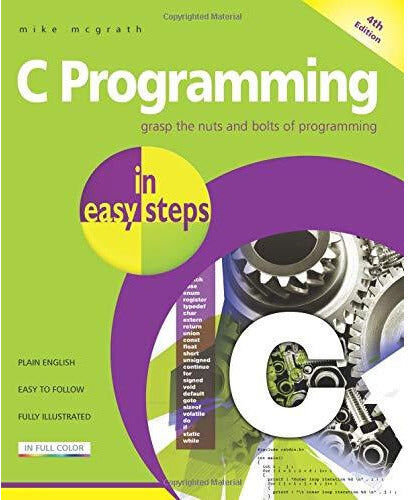
In Easy Steps Limited C Programming In Easy Steps 4th EditionC Programming in easy steps has an easy-to-follow style that will appeal to anyone who wants to begin programming in C, from programmers moving from another programming language, to the student who is studying C programming at school or college, or to those seeking a career in computing who need a fundamental understanding of procedural programming. C Programming in easy steps begins by explaining how to download and install a free C compiler so that you can quickly begin to create your own executable programs by copying the book's examples. You need have no previous knowledge of any programming language so it's ideal for the newcomer to computer programming. Each chapter builds your knowledge of C. C Programming in easy steps contains separate chapters on the major features of the C language. There are complete example programs that demonstrate each aspect of C together with screenshots that illustrate the output when that program has been executed. The sample code provided all has colored syntax-highlighting for clearer understanding. By the end of this book you will have gained a sound understanding of the C language and be able to write your own C programs and compile them into executable files that can be run on any compatible computer. Fully updated and revised since the third edition, which was published in April 2009.5,49 £*Shipping: 2,99 £Secure redirect to the provider
-
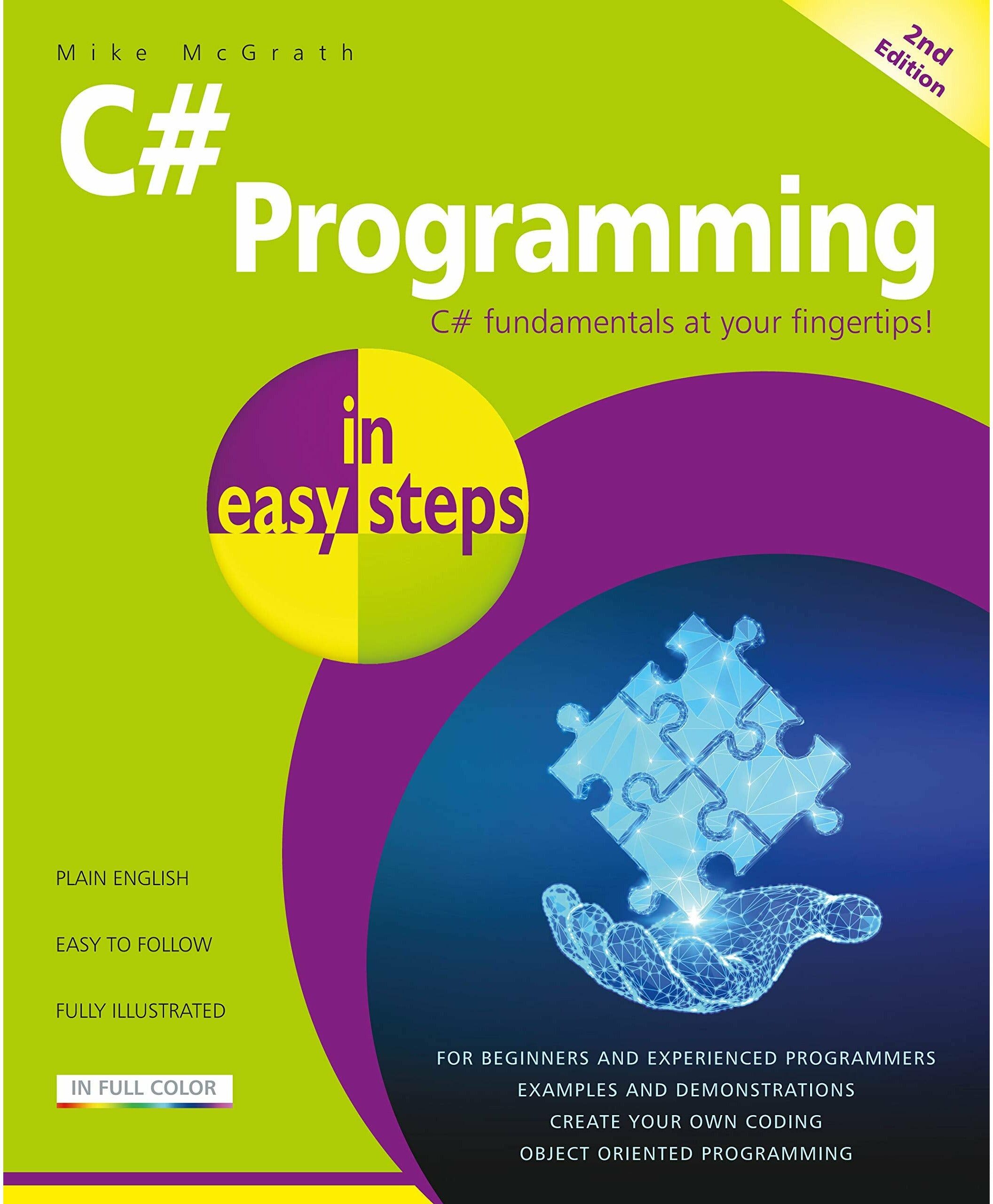
In Easy Steps Limited C# Programming in easy steps, 2nd edition by Mike McGrathC# Programming in easy steps, 2nd edition will teach you to code applications, and demonstrates every aspect of the C# language you will need to produce professional programming results. Its examples provide clear syntax-highlighted code showing C# language basics including variables, arrays, logic, looping, methods, and classes. C# Programming in easy steps, 2nd edition begins by explaining how to install the free Visual Studio Community Edition, to create an environment in which you can quickly begin to create your own executable programs by copying the book's examples. It demonstrates all the C# language basics before moving on to provide examples of Object Oriented Programming. The book concludes by demonstrating how you can use your acquired knowledge to create graphic programs for traditional PC Desktop apps, and also as Universal apps for multiple devices. C# Programming in easy steps, 2nd edition has an easy-to-follow style that will appeal to: Anyone who wants to begin programming in C# The programmer who quickly wants to add C# to their skills set The hobbyist who wants to begin creating apps for their own computer The student, and to those seeking a career in computing, who need a fundamental understanding of C# programming Table of contents: Getting started Storing values Performing operations Making statements Devising methods Handling strings Accessing files Solving problems Creating objects Controlling events Building an application Targeting devices4,98 £*Shipping: 1,99 £Secure redirect to the provider
-
Uplift Essentials Smart Automatic Curtain Robot Opener For Remote Controlled Home Automation track TypeTransform your mornings and evenings with the effortless comfort of a smarter home. This automatic curtain opener turns your existing curtains into a modern handsfree system in seconds, making it perfect for busy homeowners, renters, and smart home...127,97 $*Shipping: 0,00 $Secure redirect to the provider
-
Inspire Picks AISIA Q1 3D AI Facial Skin Analyzer 8 Spectrum Professional Skin Analysis Machine 220vEnhance professional skincare consultations with the AI skin analyzer, designed to provide detailed facial imaging using advanced 3D technology and an 8spectrum analysis system. The facial skin analyzer captures highresolution images to help assess...2482,14 $*Shipping: 0,00 $Secure redirect to the provider


-
What is the correct utilitarian solution?
The correct utilitarian solution is to maximize overall happiness and minimize overall suffering for the greatest number of people. This means making decisions that result in the greatest net benefit for the majority of individuals, even if it may not benefit everyone equally. Utilitarianism focuses on the consequences of actions and seeks to promote the greatest good for the greatest number, taking into account the well-being of all individuals affected by the decision. It also emphasizes the importance of considering long-term effects and the potential impact on future generations. **
-
What is the utilitarian ethics of Bentham and Mill?
Utilitarian ethics, as proposed by Jeremy Bentham and John Stuart Mill, is a consequentialist theory that focuses on maximizing overall happiness or pleasure and minimizing pain or suffering. According to Bentham, actions should be judged based on their ability to produce the greatest amount of pleasure for the greatest number of people, known as the principle of utility. Mill expanded on this by introducing the concept of higher and lower pleasures, arguing that intellectual and moral pleasures are more valuable than physical pleasures. Both Bentham and Mill believed that the ultimate goal of ethics should be to promote the greatest happiness for the greatest number of individuals. **
-
What are the differences between deontological ethics and utilitarian ethics?
Deontological ethics, also known as duty-based ethics, focuses on the inherent rightness or wrongness of actions themselves, regardless of their consequences. It emphasizes following moral rules and duties, such as telling the truth or keeping promises, based on principles like the categorical imperative. On the other hand, utilitarian ethics, also known as consequentialist ethics, prioritizes the outcomes or consequences of actions. It aims to maximize overall happiness or well-being for the greatest number of people, often through the calculation of benefits and harms. While deontological ethics emphasizes duty and rules, utilitarian ethics prioritizes the greatest good for the greatest number. **
-
What is the difference between deontological ethics and utilitarian ethics?
Deontological ethics, also known as duty-based ethics, focuses on the inherent rightness or wrongness of actions themselves, regardless of their consequences. This means that certain actions are considered morally right or wrong based on whether they adhere to a set of rules or principles. On the other hand, utilitarian ethics, also known as consequentialist ethics, evaluates the morality of actions based on their outcomes or consequences. In utilitarianism, the rightness or wrongness of an action is determined by its ability to produce the greatest overall happiness or pleasure for the greatest number of people. **


How can one justify euthanasia from a utilitarian and deontological perspective?
From a utilitarian perspective, euthanasia can be justified if it results in the greatest overall happiness and minimizes suffering for the individual and their loved ones. If the person is in unbearable pain and their quality of life is extremely poor, euthanasia may be seen as the most compassionate choice to end their suffering. From a deontological perspective, euthanasia can be justified if it respects the individual's autonomy and right to make decisions about their own life and death. If the person has made a well-informed and voluntary decision to end their life, then it can be seen as morally permissible to honor their wishes. However, deontological ethics also emphasize the importance of respecting the sanctity of life, so the decision to pursue euthanasia should be carefully considered in light of these conflicting principles. **
How can euthanasia be justified from a utilitarian and deontological perspective?
From a utilitarian perspective, euthanasia can be justified if it results in the greatest overall happiness and minimizes suffering. If a terminally ill patient is in extreme pain and has no hope of recovery, euthanasia could be seen as a compassionate act that ends their suffering. From a deontological perspective, euthanasia can be justified if it upholds the principle of respecting an individual's autonomy and right to make decisions about their own life. If a person has made a rational and informed decision to end their life, then respecting their autonomy could be seen as a moral duty. However, deontological ethics also emphasize the importance of not treating individuals as mere means to an end, so careful consideration must be given to ensure that euthanasia is not being used for ulterior motives. **
Top-Angebote
Products related to Utilitarian:
-
Convenient Shelf,Utilitarian Corner Shelf,Wall Corner BookshelfConvenient Shelf,Utilitarian Corner Shelf,Wall Corner Bookshelf A Perfect Fit - Check out our newest star - a slick and vintage-themed 5-tiered rack. You'll find it to be an ideal fit for any nook and cranny in your house or workspace.206,99 $*Shipping: 0,00 $Secure redirect to the provider
-
York Wallcoverings Beige Robotics Peel and Stick WallpaperA simple drawing of robotic parts become line art in pattern Robotics. This Robotics Peel & Stick Wallpaper measures approximately 27 inches wide by 20 feet long, covering About 45 square feet per roll.59,50 $*Shipping: 0,00 $Secure redirect to the provider
-
In Easy Steps Limited C Programming In Easy Steps 4th EditionC Programming in easy steps has an easy-to-follow style that will appeal to anyone who wants to begin programming in C, from programmers moving from another programming language, to the student who is studying C programming at school or college, or to those seeking a career in computing who need a fundamental understanding of procedural programming. C Programming in easy steps begins by explaining how to download and install a free C compiler so that you can quickly begin to create your own executable programs by copying the book's examples. You need have no previous knowledge of any programming language so it's ideal for the newcomer to computer programming. Each chapter builds your knowledge of C. C Programming in easy steps contains separate chapters on the major features of the C language. There are complete example programs that demonstrate each aspect of C together with screenshots that illustrate the output when that program has been executed. The sample code provided all has colored syntax-highlighting for clearer understanding. By the end of this book you will have gained a sound understanding of the C language and be able to write your own C programs and compile them into executable files that can be run on any compatible computer. Fully updated and revised since the third edition, which was published in April 2009.5,49 £*Shipping: 2,99 £Secure redirect to the provider
-
In Easy Steps Limited C# Programming in easy steps, 2nd edition by Mike McGrathC# Programming in easy steps, 2nd edition will teach you to code applications, and demonstrates every aspect of the C# language you will need to produce professional programming results. Its examples provide clear syntax-highlighted code showing C# language basics including variables, arrays, logic, looping, methods, and classes. C# Programming in easy steps, 2nd edition begins by explaining how to install the free Visual Studio Community Edition, to create an environment in which you can quickly begin to create your own executable programs by copying the book's examples. It demonstrates all the C# language basics before moving on to provide examples of Object Oriented Programming. The book concludes by demonstrating how you can use your acquired knowledge to create graphic programs for traditional PC Desktop apps, and also as Universal apps for multiple devices. C# Programming in easy steps, 2nd edition has an easy-to-follow style that will appeal to: Anyone who wants to begin programming in C# The programmer who quickly wants to add C# to their skills set The hobbyist who wants to begin creating apps for their own computer The student, and to those seeking a career in computing, who need a fundamental understanding of C# programming Table of contents: Getting started Storing values Performing operations Making statements Devising methods Handling strings Accessing files Solving problems Creating objects Controlling events Building an application Targeting devices4,98 £*Shipping: 1,99 £Secure redirect to the provider
-
Is it utilitarian or selfish?
It depends on the specific situation and context. Utilitarianism is a moral theory that focuses on maximizing overall happiness or well-being for the greatest number of people. If an action benefits the majority of individuals and promotes the greatest good, it can be considered utilitarian. On the other hand, if an action primarily serves one's own interests without regard for others, it may be seen as selfish. Ultimately, the distinction between utilitarian and selfish behavior is determined by the impact on others and the underlying intentions of the individual. **
-
What is a utilitarian action?
A utilitarian action is one that aims to maximize overall happiness or well-being for the greatest number of people. In utilitarianism, the morality of an action is determined by its consequences, with the most ethical action being the one that results in the greatest overall benefit. This ethical theory focuses on the outcomes of actions rather than the intentions behind them. Utilitarian actions prioritize the greatest good for the greatest number of individuals, often requiring individuals to make decisions that may not benefit themselves personally but benefit society as a whole. **
-
What is the correct utilitarian solution?
The correct utilitarian solution is to maximize overall happiness and minimize overall suffering for the greatest number of people. This means making decisions that result in the greatest net benefit for the majority of individuals, even if it may not benefit everyone equally. Utilitarianism focuses on the consequences of actions and seeks to promote the greatest good for the greatest number, taking into account the well-being of all individuals affected by the decision. It also emphasizes the importance of considering long-term effects and the potential impact on future generations. **
-
What is the utilitarian ethics of Bentham and Mill?
Utilitarian ethics, as proposed by Jeremy Bentham and John Stuart Mill, is a consequentialist theory that focuses on maximizing overall happiness or pleasure and minimizing pain or suffering. According to Bentham, actions should be judged based on their ability to produce the greatest amount of pleasure for the greatest number of people, known as the principle of utility. Mill expanded on this by introducing the concept of higher and lower pleasures, arguing that intellectual and moral pleasures are more valuable than physical pleasures. Both Bentham and Mill believed that the ultimate goal of ethics should be to promote the greatest happiness for the greatest number of individuals. **
Similar search terms for Utilitarian
-
Uplift Essentials Smart Automatic Curtain Robot Opener For Remote Controlled Home Automation track TypeTransform your mornings and evenings with the effortless comfort of a smarter home. This automatic curtain opener turns your existing curtains into a modern handsfree system in seconds, making it perfect for busy homeowners, renters, and smart home...127,97 $*Shipping: 0,00 $Secure redirect to the provider
-
Inspire Picks AISIA Q1 3D AI Facial Skin Analyzer 8 Spectrum Professional Skin Analysis Machine 220vEnhance professional skincare consultations with the AI skin analyzer, designed to provide detailed facial imaging using advanced 3D technology and an 8spectrum analysis system. The facial skin analyzer captures highresolution images to help assess...2482,14 $*Shipping: 0,00 $Secure redirect to the provider
-
soundcore AeroFit 2 AI Assistant AI Translation for a Connected WorldBulk Headphones, Earbuds, and Speakers for Business >>>>> Stay Comfortable, Stay Aware: With soft materials and a non-invasive design, the earbuds deliver all-day comfort and breathability, keeping you attuned to the world while enjoying music. Free...109,99 $*Shipping: 0,00 $Secure redirect to the provider
-
York Wallcoverings Grey Robotics Peel and Stick WallpaperA simple drawing of robotic parts become line art in pattern Robotics. This Robotics Peel & Stick Wallpaper measures approximately 27 inches wide by 20 feet long, covering About 45 square feet per roll.53,99 $*Shipping: 0,00 $Secure redirect to the provider
-
What are the differences between deontological ethics and utilitarian ethics?
Deontological ethics, also known as duty-based ethics, focuses on the inherent rightness or wrongness of actions themselves, regardless of their consequences. It emphasizes following moral rules and duties, such as telling the truth or keeping promises, based on principles like the categorical imperative. On the other hand, utilitarian ethics, also known as consequentialist ethics, prioritizes the outcomes or consequences of actions. It aims to maximize overall happiness or well-being for the greatest number of people, often through the calculation of benefits and harms. While deontological ethics emphasizes duty and rules, utilitarian ethics prioritizes the greatest good for the greatest number. **
-
What is the difference between deontological ethics and utilitarian ethics?
Deontological ethics, also known as duty-based ethics, focuses on the inherent rightness or wrongness of actions themselves, regardless of their consequences. This means that certain actions are considered morally right or wrong based on whether they adhere to a set of rules or principles. On the other hand, utilitarian ethics, also known as consequentialist ethics, evaluates the morality of actions based on their outcomes or consequences. In utilitarianism, the rightness or wrongness of an action is determined by its ability to produce the greatest overall happiness or pleasure for the greatest number of people. **
-
How can one justify euthanasia from a utilitarian and deontological perspective?
From a utilitarian perspective, euthanasia can be justified if it results in the greatest overall happiness and minimizes suffering for the individual and their loved ones. If the person is in unbearable pain and their quality of life is extremely poor, euthanasia may be seen as the most compassionate choice to end their suffering. From a deontological perspective, euthanasia can be justified if it respects the individual's autonomy and right to make decisions about their own life and death. If the person has made a well-informed and voluntary decision to end their life, then it can be seen as morally permissible to honor their wishes. However, deontological ethics also emphasize the importance of respecting the sanctity of life, so the decision to pursue euthanasia should be carefully considered in light of these conflicting principles. **
-
How can euthanasia be justified from a utilitarian and deontological perspective?
From a utilitarian perspective, euthanasia can be justified if it results in the greatest overall happiness and minimizes suffering. If a terminally ill patient is in extreme pain and has no hope of recovery, euthanasia could be seen as a compassionate act that ends their suffering. From a deontological perspective, euthanasia can be justified if it upholds the principle of respecting an individual's autonomy and right to make decisions about their own life. If a person has made a rational and informed decision to end their life, then respecting their autonomy could be seen as a moral duty. However, deontological ethics also emphasize the importance of not treating individuals as mere means to an end, so careful consideration must be given to ensure that euthanasia is not being used for ulterior motives. **
* All prices are inclusive of VAT and, if applicable, plus shipping costs. The offer information is based on the details provided by the respective shop and is updated through automated processes. Real-time updates do not occur, so deviations can occur in individual cases. ** Note: Parts of this content were created by AI.